---As autumn settled over the Qiantang River and the
fragrance of osmanthus filled the streets of Hangzhou,
the Seminar on Irrigation District Construction and Management
for Belt and Road Countries and the Seminar on Modernization
and Sustainable Development of Large and Medium-sized
Irrigation Districts for Asian Countries were successfully
concluded in the city in September 2026. The two seminars
were organized by the National Research Institute for
Rural Electrification, MWR, P. R. China/Hangzhou Regional
Center (Asia-Pacific) for Small Hydro Power (HRC), and
co-organized by the China Irrigation and Drainage Development
Center (CIDDC) and the Chinese National Committee on Irrigation
and Drainage (CNCID), which marked HRC's 207th and 208th
international training programs, respectively. A total
of 65 government officials and technical experts from
13 countries—Armenia, Egypt, Ethiopia, Iraq, Jordan, Kazakhstan,
Laos, Malaysia, Pakistan, Papua New Guinea, Sri Lanka,
Thailand and Türkiye—gathered in Hangzhou for in-depth
exchanges and study on irrigation district modernization,
water-saving irrigation and digital irrigation district
development.
At the opening ceremony, Ms. Shu Jing, Deputy Director
General of HRC, extended a warm welcome to all participants.
She emphasized that irrigation districts are fundamental
to food security and sustainable agricultural development,
and that modernizing large and medium-sized irrigation
districts is an important means of addressing water scarcity
and improving agricultural water use efficiency. She reaffirmed
China's commitment to sharing its experience in irrigation
development with Belt and Road countries and to deepening
practical cooperation in water resources management and
irrigated agriculture. Participant representatives also
addressed the ceremony. Mr. Mohamad Rushdi Mohamad Mohamad,
Advisor to the Secretary General and Director of the Central
Region of Ministry of Water and Irrigation of Jordan/Jordan
Valley Authority, and Ms. Navoda Rangani Wickramasena
Rajamuni Dewage, Chief Engineer of Department of Irrigation
of Sri Lanka, both expressed their strong interest in
learning from China's experience in irrigation district
modernization and advancing bilateral and multilateral
cooperation in water-related technologies.
During the seminars, senior experts and scholars in irrigation
and drainage delivered a series of presentations covering
agricultural water conservation and efficiency, water
measurement and monitoring technologies for modern irrigation
districts, the modernization of large irrigation districts,
digital twins for irrigation districts, and comprehensive
reform of agricultural water pricing, building a curriculum
system integrating policy and theory, technologies and
equipment, and practical case studies. HRC also held in-depth
discussions with participant representatives from relevant
countries on potential cooperation in joint research,
engineering projects and other areas, laying a solid foundation
for future technical collaboration. In the country report
session, participants shared updates on the development
of irrigation and drainage in their respective countries,
outlined key challenges and exchanged views with Chinese
experts on potential areas for cooperation.
The seminars combined presentations with study tours,
allowing participants to explore China's experience in
irrigation development and water management at first hand.
In Hangzhou, they visited West Lake and Xixi National
Wetland Park to learn how China puts the vision of harmonious
coexistence between humanity and nature into practice
through ecological conservation and governance. They also
visited Liangzhu Ancient City Ruins Park to explore the
remains of ancient irrigation and water conservancy systems
dating back approximately 5,000 years. Participants also
travelled to Lu'an, Anhui Province, where they visited
the Pi-Shi-Hang Irrigation District's operations and dispatch
center, its digital twin platform, and key hydraulic structures,
including aqueducts along the main canal system. These
visits offered participants first-hand insight into the
operation and maintenance of one of the largest irrigation
districts developed since the founding of the People's
Republic of China. They also provided an opportunity to
observe the multiple benefits of large-scale irrigation
infrastructure in flood control, irrigation, water supply
and power generation.
At the closing ceremony, Mr. Xu Zhifeng, Director General
of HRC, congratulated all participants on completing the
seminars. He noted that, as climate change intensifies
and food security challenges grow, the modernization and
sustainable development of irrigation districts have become
shared priorities for countries around the world. He described
the seminars as a concrete action by China to actively
align with the high-quality development needs of the Belt
and Road cooperation and strengthen capacity-building
in the irrigation sector across partner countries. China,
he said, stands ready to deepen dialogue and cooperation
with other countries on irrigation district modernization
and to explore sustainable development pathways suited
to their respective national conditions. Speaking on behalf
of the participants, Mr. Irfan Ali, Director of Planning
Department of Agricultural Research Council of Pakistan,
thanked the Chinese organizers for their thoughtful arrangements.
He said that China's experience in water-saving policies
and digital twin irrigation district development was impressive
and would help Pakistan further improve its water resources
development strategy. Mr. Atbandit Souphalak, Deputy Director
General of Department of Agriculture and Environment,
Savannakhet Province, Lao PDR, noted that the seminars
had provided a valuable platform for sharing knowledge
and experience while building bridges of friendship among
participating countries. He expressed the hope that these
connections would continue to grow stronger and support
further cooperation.
Though mountains may separate us by thousands of miles,
water connects us. Water resources are fundamental to
people's livelihoods and development, and irrigation districts
play a vital role in safeguarding food security. China
and Belt and Road countries share common development goals
and considerable potential for cooperation in food security,
agricultural water use efficiency and irrigation district
modernization. Looking ahead, HRC will continue to leverage
its role as a platform for international cooperation and
strengthen international capacity-building in water resources
and hydropower. Through training, technical exchanges
and project-based cooperation, HRC will work with partners
around the world, under the frameworks of the Belt and
Road Initiative and South–South cooperation, to share
China's experience and approaches in water governance
and irrigation development. These efforts will contribute
to global water governance, food security and sustainable
development, while opening a new chapter in mutually beneficial
international cooperation in the water sector. (2026-10-15)
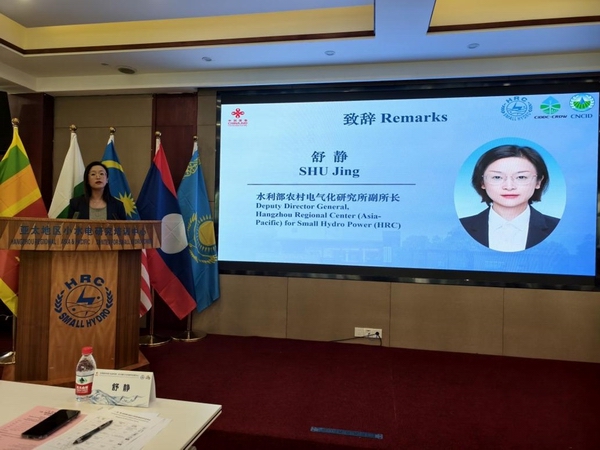
Opening Ceremony
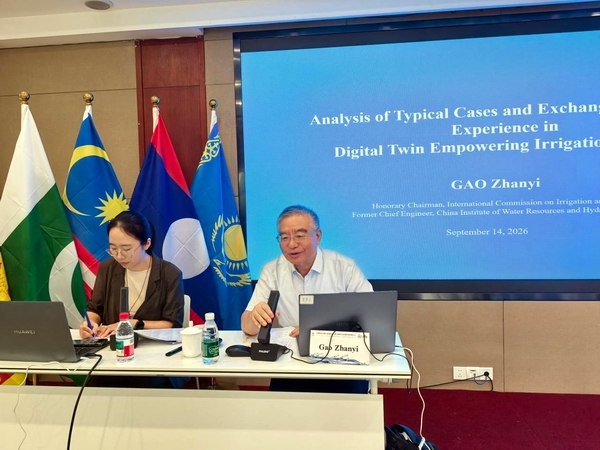
Presentation
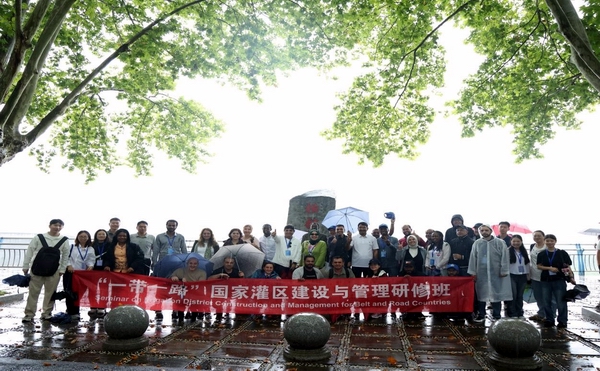
Visit to the Pi River Headworks Project
of Pi-Shi-Hang Irrigation District
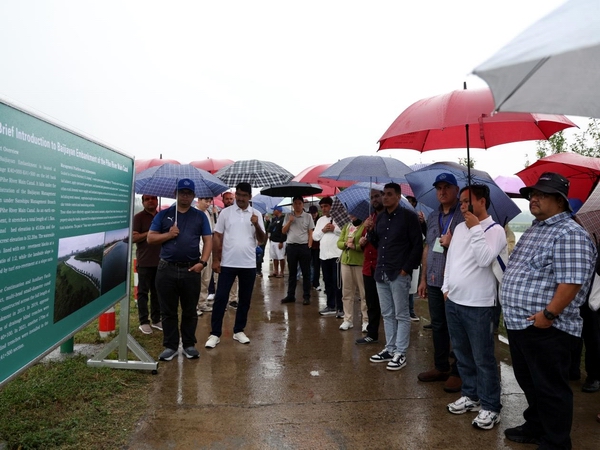
Visit to the Baijiayan large-scale fill
section of the Pi River Main Canal
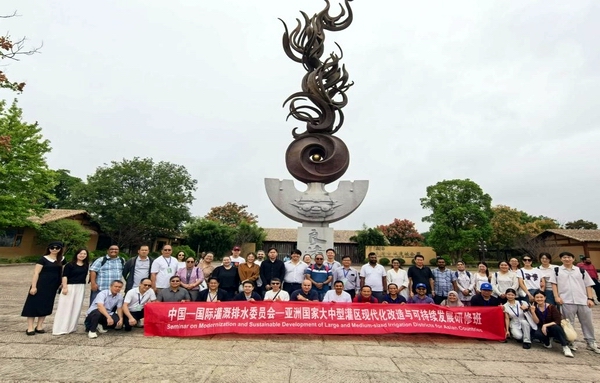
Visit to Archaeological Ruins of Liangzhu
City
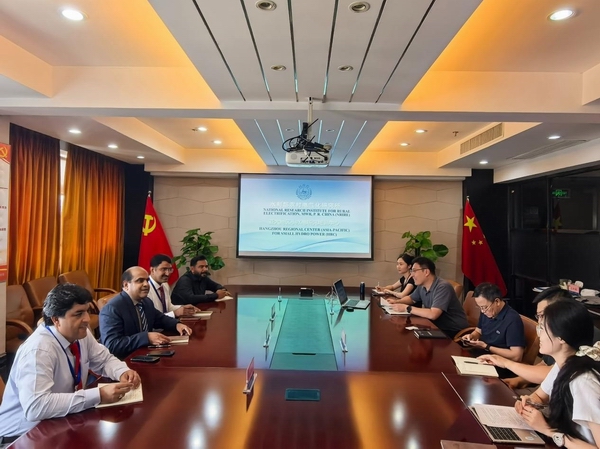
Technical Exchange with Participant Representatives
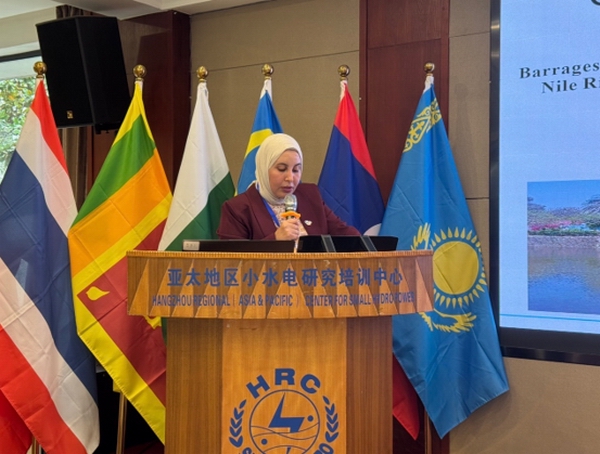
Country Report
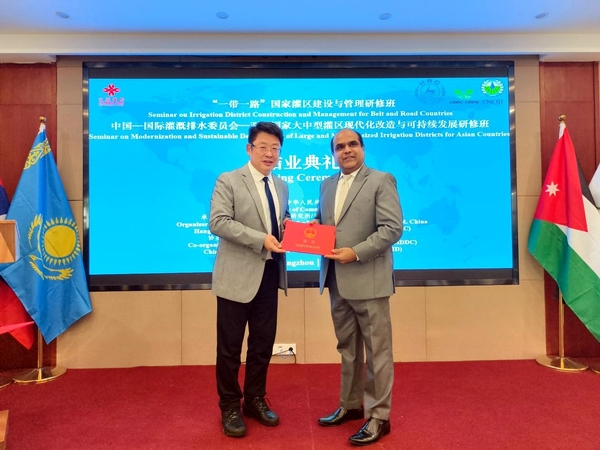
Certificates Presentation
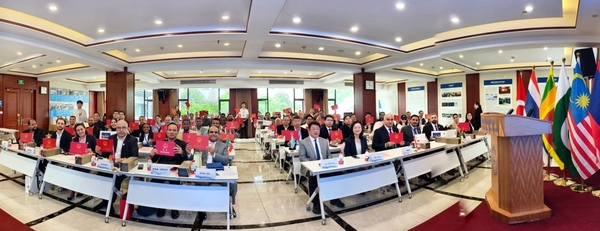
Closing Ceremony
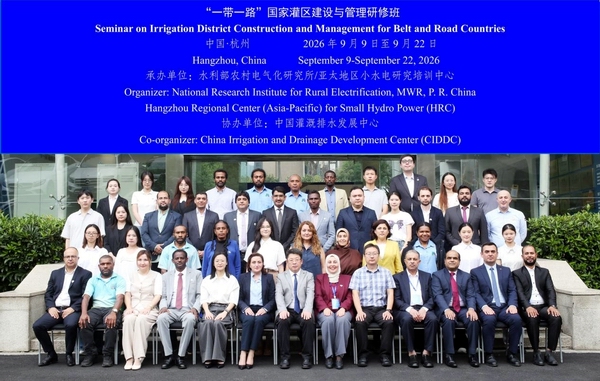
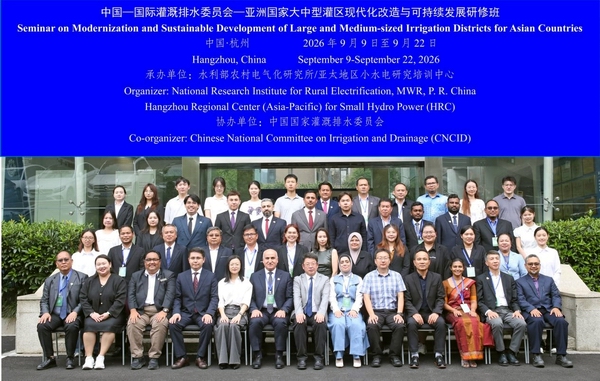
Group Photo of the Seminars